

About Us
Built by educators who understand how students learn chemistry—and how to help them succeed.
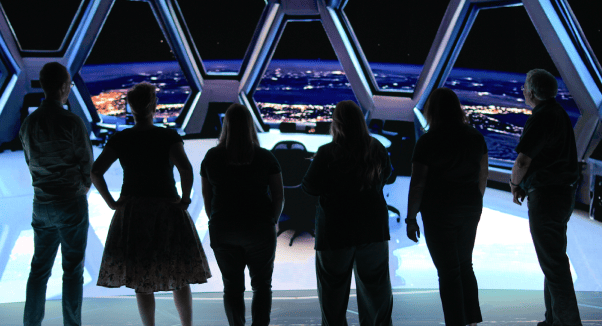
Why We Created REAL CHEM
MAKING CHEMISTRY MEANINGFUL
We help students discover chemistry’s role in their world and recognize their potential to shape it.
CREATING CHEMISTS FOR LIFE
We allow students to see how their lives and careers can be enriched by learning to think like a chemist.
Our Core Principles

RELEVANT
We show students how chemistry connects to careers they never considered, opening doors to opportunities in STEM and beyond.

ENGAGING
Cinematic video of real people and real scenarios, followed by interactive activities with personalized feedback, engages and supports students.

ACTIVE LEARNING
Students participate in interactive activities and applications—building confidence to tackle the next question.
Where Research Meets Innovation

Carnegie Mellon University's Open Learning Initiative
OLI brings decades of learning science research to REAL CHEM, creating proven approaches that drive student success.
Arizona State University's ETX Center
ETX contributes cutting-edge technology to help REAL CHEM reach more students effectively.
Meet some of the Real People Behind REAL CHEM

Norman Bier
Executive Director of OLI, Carnegie Mellon University
I'm the Director of the Open Learning Initiative (OLI) at Carnegie Mellon University. My work sits at the intersection of CMU’s internal educational practice, ongoing learning science research, and external collaboration

Ariel Anbar
Professor, School of Molecular Sciences Arizona State University
I'm a scientist and educator interested in Earth’s past and future as an inhabited world as well as in the prospects for life beyond.
Kim Larson
Director of Special Projects, Product Owner - REAL CHEM
I lead the ETX Chemistry project, applying evidence-based design to develop technology-mediated learning environments and facilitating research that continuously improves the learning experience.

Joe Tamer
Director of Distribution
As a former HS Chemistry teacher and long time STEM educator with ASU's Center for Education Through Exploration, it's my pleasure to share REAL CHEM with others.
Dave Yaron
Professor of Chemistry, Carnegie Mellon University
My research area is computational chemistry. My current focus is using machine learning to derive quantum chemical models from data.
Gizelle Sherwood
Director of Undergraduate Studies and Labs Teaching Professor Department of Chemistry Carnegie Mellon University
I teach freshmen and sophomores using both traditional and modern methods, emphasizing active learning with real-world applications. I also develop chemistry outreach programs for K-12 through partnerships with the Gelfand Center, PJAS, and the Boy Scouts.

Josh Hartman
Assistant Professor of Chemistry, UC Riverside
After earning my graduate degree in computational chemistry at UC Riverside, I taught general chemistry and worked as a data scientist. I now focus on making chemistry education more engaging through interactive simulations, machine learning, and expanding undergraduate research.
Mark Blaser
Open Learning Initiative Domain Fellow - Chemistry Carnegie Mellon University
I am an OLI Domain Fellow in Chemistry at Carnegie Mellon, working on the REAL CHEM project. With 30+ years in STEM education, I focus on adaptive learning, TEL, and curriculum development, including leading the $1M AHA! Chemistry Project.

Paulette Vincent-Ruz
Assistant Professor in Chemistry Education Research
Chemistry & Biochemistry Department, New Mexico State University
I'm an assistant professor in the Chemistry & Biochemistry department.
Rod D. Roscoe
Associate Professor Human Systems Engineering, Arizona State University
I specialize in human systems engineering at the Ira A. Fulton Schools of Engineering. My work focuses on fostering diversity, equity, and inclusion in education and research as the Director of Inclusive Excellence for the Learning Engineering Institute.

Tara Nkrumah
Assistant Professor Mary Lou Fulton College for Teaching and Learning Innovation
I research equitable teaching practices in STEM education at Mary Lou Fulton Teachers College. My work explores anti-oppressive discourse and culturally responsive pedagogy through the theater of the oppressed.

Hal Turner
Community Manager and Application Support Lead
As a Customer Success professional with 16+ years of experience in sales and support, I drive sales expansion through customer success by building strong relationships, incorporating user feedback into product improvements, and delivering top-tier training and support tools.
Foundations of REAL CHEM
REAL CHEM was developed with support from philanthropic funders and partner organizations committed to improving undergraduate chemistry education.
Early funding supported research, instructional materials, and course design approaches that informed the development of REAL CHEM, while ongoing collaborations with educators, researchers, and institutional partners continue to shape its content, structure, and implementation.
Together, these partnerships span a range of instructional models, learner populations, and forms of support—reflecting a shared investment in advancing evidence-based chemistry education.

Contributing Initiatives and Partnerships

AHA! Chemistry
The instructional approaches, classroom strategies, and sustained community of practice developed through this work—supported through a grant from the California Learning Lab—directly informed subsequent platform development and expansion.

Critical Chemistry
This work advanced a learn-by-doing, case-study-based approach to introductory chemistry that informed the design and evolution of RC’s explorations and was supported by funding from the Bill & Melinda Gates Foundation.

OLI General Chemistry 1
A scaffolded, feedback-rich instructional model incorporating virtual labs and assessments, with content adapted from OpenStax Chemistry, informed REAL CHEM’s Foundation layer with support from Carnegie Mellon University.
Explore What REAL CHEM Has to Offer
Join educators who believe in making chemistry meaningful for every student.

