Insights and innovations for chemistry educators, sparking connections in every lesson.
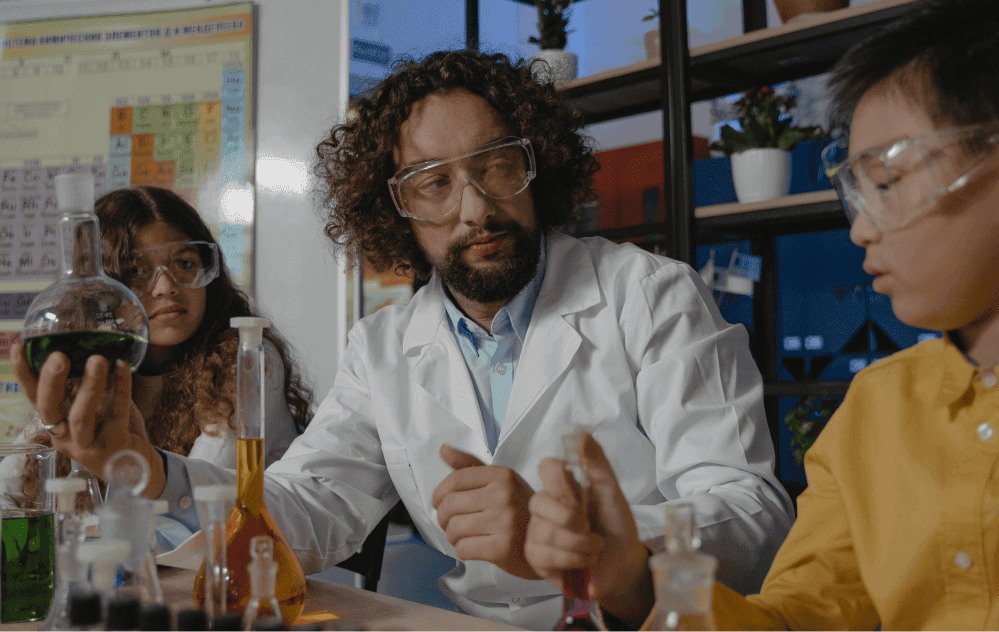
“I could be a scientist too.” That spark when a student sees themselves in science is what REAL CHEM is all about.
"When I heard Mario Molina won the Nobel Prize, I realized—I could be a scientist too.”
At REAL CHEM, we celebrate the moments that ignite a lifelong passion for science.
Dr. Paulette Vincent-Ruz’s story is a powerful reminder of what representation and possibility can spark.
THE STORY OF REAL CHEM
Created in collaboration between Arizona State University and Carnegie Mellon University, REAL CHEM is designed to help educators engage, inspire, and build confidence in their general chemistry students.
Backed by years of teaching experience and learning science research, we are committed to the idea that reaching students with varying levels of academic preparation is the key to boosting their success. That’s why we developed cinematic videos that break down complex concepts, problem-solving assignments using real-world data, and active learning strategies to form the foundation of our courseware.
With over 11,000 students using REAL CHEM across 30 institutions, we’re making an impact on retention and student outcomes. When students see themselves in chemistry, they explore deeper, solve harder problems, and push their understanding further.
Let’s build bonds that last beyond the classroom.
— The REAL CHEM Team
11,000 students are using REAL CHEM

EDUCATOR'S CORNER
Amy E. Irwin, PhD
Chemist/OBM Dr. of Documents
/Faculty Ambassador, REAL CHEM

Beyond the Spine
Chemistry’s Role in Chiropractic Healing
In our “Introduction to Solids and Liquids” video, we note that athletes lean on many specialists to stay healthy—chiropractors among them. Though best known for spinal adjustments, chiropractors rely on chemistry at every turn.
Pain is the chief complaint. Tight joints or strained muscles hurt because injury triggers histamines, prostaglandins, and cytokines, which swell tissue, summon immune cells, and amplify discomfort. By mastering these pathways, chiropractors pair manual therapy with diet and lifestyle tweaks that dial down inflammation.
Nutrition is equally central. Macro- and micronutrients—proteins, fats, carbs, calcium, magnesium, vitamin D—fuel repair, stabilize nerves, and fortify bone. A chiropractor who grasps their molecular roles can prescribe meals or supplements that curb chronic inflammation, fatigue, and joint instability.
Many clinics run blood or saliva panels to track biomarkers such as glucose, vitamin reserves, hormones, and C-reactive protein. Reading those results demands fluency in both assay chemistry and human metabolism; a patient with elevated CRP, for instance, might be steered toward omega-3s or vitamin D.
Hydration and electrolyte balance round out routine care. Ions—sodium, potassium, calcium, magnesium—govern nerve impulses and muscle contraction, and even mild dehydration skews that chemistry, sapping athletic performance.
Because the nervous system transmits signals through neurotransmitters (acetylcholine, dopamine, serotonin), chemical imbalances can leave muscles locked, limbs tingling, or stress responses stuck in overdrive. Understanding hormone cascades—say, cortisol spikes—lets chiropractors blend physical treatment with stress-reduction strategies.
Finally, safe practice hinges on pharmacology. Blood thinners, analgesics, and muscle relaxants all shift a patient’s internal chemistry, changing how tissue responds to manipulation or supplements. Knowing those interactions protects the patient and fine-tunes care.
Chiropractors may not work with beakers, yet chemistry guides every evaluation, adjustment, and recommendation. REAL CHEM helps students connect these classroom principles to real-world careers—showing how a solid grasp of chemical science underpins effective healthcare.
– Amy E. Irwin, PhD
What's New at REAL CHEM?
Updates to REAL CHEM I & II NEW this Fall!
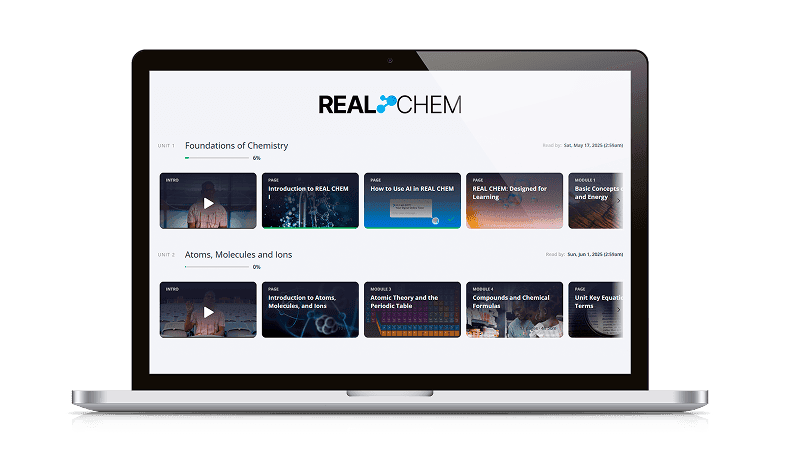
Give your students a tour of the chemical world, the REAL CHEM way!
New features and additions include:


Interested in learning more about these new features?
Click here to schedule a demo with our team

Community of Practice
We’re building a community of general Chemistry educators to transform how students experience chemistry—and we want you to be part of it.
Through collaborative efforts to share best practices and innovative teaching strategies, we’re working to make chemistry more engaging, accessible, and impactful for all students. REAL CHEM is more than just courseware; it’s a movement to transform general Chemistry with active learning, real-world connections, and meaningful student engagement.
We are also offering opportunities to lead the charge in improving general chemistry education, contribute to a growing community of educators and be compensated for your expertise and time. Your voice will help shape the future of REAL CHEM and bring REAL change to general Chemistry.
Join us in creating better teaching and learning experiences —together.
Upcoming Events & Pilot Opportunities
Last week, Dr. Elaine Bernal led an insightful session for our Faculty Innovation Webinar Series, sharing their research on engaging non-majors in introductory chemistry. Their insights into using generative AI for smart course design gave attendees tools they can use to make chemistry the right fit for every student.
Faculty innovation shouldn’t happen in isolation. Each event in our Faculty Innovation Webinar Series spotlights faculty sharing what’s working in their classrooms.
Stay tuned, and register for our sessions. Together, we’ll share ideas on making science more welcoming, shaping engaging chemistry experiences that resonate with ALL learning styles.

Faculty Innovation Cohort Webinar Launch Page for REAL CHEM
- Come and meet the REAL CHEM team at EDUCAUSE | Oct. 27-30, Nashville, TN
- Join MERLOT Innovation Project and co-author a presentation at the Online Learning Consortium ACCELERATE Conference | Nov. 17-20, 2025