

Insights and innovations for chemistry educators, sparking connections in every lesson.
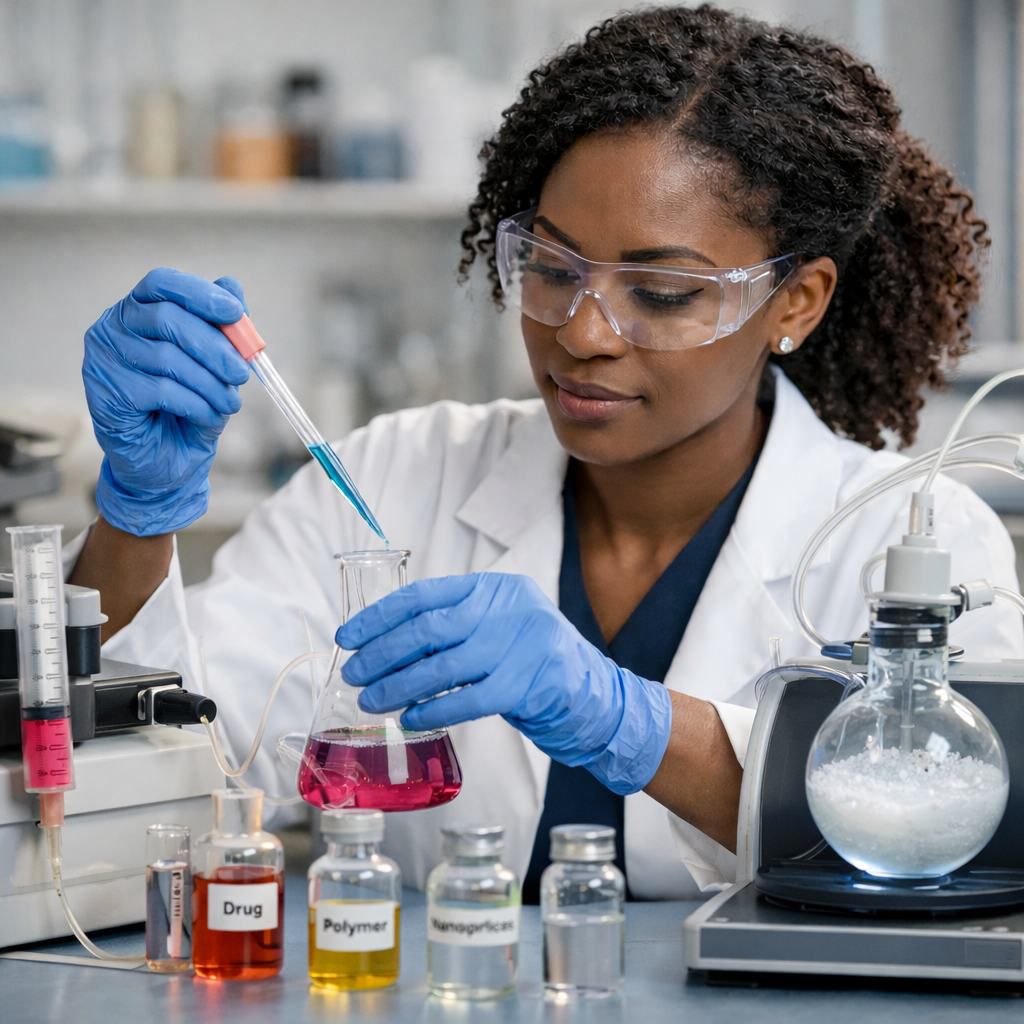
Black History Month invites us to thoughtfully challenge the stories we center in chemistry and to expand whose contributions we make visible in our classrooms.
This February, we have been highlighting Black chemists across our social media, from scientists whose work deepened our understanding of specific elements in the periodic table to scholars whose broader contributions continue to shape research, industry, and education. Honoring this history is not just about recognition. It is about belonging. When students see a fuller story of chemistry, they are more likely to see themselves in it.
This month’s newsletter continues that spirit of reflection and connection. We are sharing highlights from recent REAL CHEM webinars and Community of Practice meetings, along with faculty conversations focused on instructor support and sustainable course design. We are also looking ahead to the Biennial Conference on Chemical Education, an opportunity to connect with colleagues who care deeply about strengthening General Chemistry and supporting the students in front of us.
In Educator’s Corner, Dr. Ashley Evanoski-Cole reflects on the discovery and remediation of the ozone hole, one of the most compelling science and policy success stories in modern chemistry, and shares how she is bringing a REAL CHEM Exploration on chemical kinetics into class time.
You will also find this month’s What We’re Reading section below, where we highlight current research stories that show chemistry in action. These are the kinds of examples that help students see not just what chemistry is, but what it can do in the world around them.
As you read and teach this month, consider where stories like these might fit into your course. Highlighting current research, diverse scientists, and realworld applications does not require a full redesign. Sometimes it begins with a single example, a short discussion, or a question that connects content to the world beyond the textbook.
If you are trying something new, highlighting diverse chemists, or thinking about how to bring more REAL CHEM moments into your classroom, I would genuinely love to hear from you. Reach out and let’s continue the conversation.
— Dr. Elaine Villanueva Bernal, Ed.D., California State University, Long Beach; Faculty Innovator, REAL CHEM
THE STORY OF REAL CHEM
Created in collaboration between Arizona State University and Carnegie Mellon University, REAL CHEM is designed to help educators engage, inspire, and build confidence in their general chemistry students.
Backed by years of teaching experience and learning science research, we are committed to the idea that reaching students with varying levels of academic preparation is the key to boosting their success. That’s why we developed cinematic videos that break down complex concepts, problem-solving assignments using real-world data, and active learning strategies to form the foundation of our courseware.
With over 11,000 students using REAL CHEM across 30 institutions, we’re making an impact on retention and student outcomes. When students see themselves in chemistry, they explore deeper, solve harder problems, and push their understanding further.
Let’s build bonds that last beyond the classroom.
— The REAL CHEM Team
Ashley Evanoski-Cole
Associate Professor of Chemistry at Westfield State University

Chemical Kinetics of the Ozone Hole
A layer of ozone in the stratosphere blocks most of the Sun’s ultraviolet radiation from reaching the Earth’s surface. Too much ultraviolet radiation can lead to skin cancer and interferes with photosynthesis in plants, making the ozone layer vital to life on Earth. Starting in the late 1970s, the ozone layer was attacked by a class of chemical compounds called chlorofluorocarbons or CFCs. CFCs are inert at Earth’s surface, but when they reach the stratosphere, CFCs are exposed to more intense ultraviolet radiation that breaks down the molecules to form chlorine radicals that rapidly destroy ozone, leading to the formation of the ozone hole.
I love using the chemistry of the ozone hole to investigate chemical kinetics in my General Chemistry II class. Upon first glance, the chemical reaction for the destruction of ozone is simple: one ozone molecule and one oxygen atom collide and form two molecules of diatomic oxygen. The relatively slow rate of this reaction does not explain the sharp drop in stratospheric ozone concentrations that are observed when the ozone hole is formed each year at the South Pole. The chemistry of this process starts to get interesting with the addition of chlorine, which acts as a catalyst. The process gets even more interesting when you consider the importance of the seasonal variation of solar radiation, the weather conditions, the presence of additional catalysts, and other variables that affect the destruction of stratospheric ozone at the Poles.
To connect kinetics and the ozone hole in General Chemistry II, we work through the REAL CHEM “Catalyst in the Clouds” Exploration activity to use a straightforward reaction chamber simulation to make experimental measurements of the reaction rate. We then interpret the collected data to determine reaction orders, the rate law, and rate constant and see the significant increase in reaction rate when the chlorine catalyst is added. This activity allows students to connect the concepts of chemical kinetics to the chemistry involved in forming the ozone hole.
To reinforce the importance of chemical kinetics, we discuss the lasting global implications of the Montreal Protocol, one of the greatest examples of scientific discovery informing effective international policy to solve a global environmental issue. Scientists and policy makers came together in 1987 to eliminate the use of CFCs that contribute to the catalytic destruction of ozone in the stratosphere. The ozone hole still forms each year, but it is shrinking over time, providing an annual visual reminder of the environmental challenges we can solve as a global community when we understand the chemistry and use that to inform policy
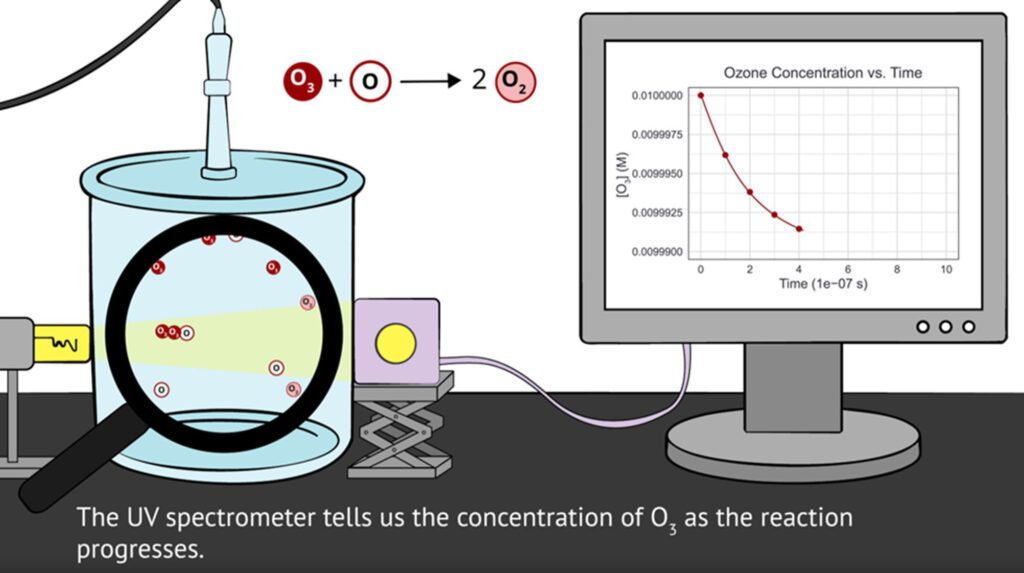
(Image from REAL CHEM Exploration “Catalyst in the Clouds”)
What We’re Reading
Curated by Dr. Elaine Villanueva Bernal
A smaller ozone hole confirms long-term recovery
New data from the World Meteorological Organization reports that the 2025 ozone hole was relatively small and short-lived, reinforcing evidence that global policy efforts are supporting long-term atmospheric recovery. This is a powerful reminder of how chemical kinetics, reaction mechanisms in the stratosphere, and international policy intersect to produce measurable environmental change
Asmart material inspired by octopus skin
Researchers developed a synthetic material that mimics the colorchanging and texture-shifting properties of octopus skin. By combining responsive polymers and engineered surface structures, the team created a material that adapts to its environment. This story connects to intermolecular forces, polymer chemistry, and structure–property relationships in materials design
Turning industrial exhaust into useful materials
A new electrode design can convert carbon dioxide from industrial exhaust into valuable carbon-based materials using electrochemistry. This approach transforms waste into something functional and points toward new strategies for carbon utilization.
This connects to redox reactions, electrochemical cells, thermodynamics, and sustainability in chemical design.
Events
Curated by Dr. Elaine Villanueva Bernal
REAL CHEM is headed to BCCE!
We’re excited to share that REAL CHEM will be at the Biennial Conference on Chemical Education (BCCE) this summer, taking place July 26–30, 2026 on the beautiful lakeside campus of the University of Wisconsin-Madison.
Join us to explore how REAL CHEM helps reimagine general chemistry through evidence-based instruction, engaging simulations, and equitable learning design. Let’s connect and talk about what’s next in chemistry education.
Engage with REAL CHEM Webinar Series
Exploring How We Teach – ETX Center Webinar Series
Facilitators:
This webinar series is organized by Arizona State University’s Center for Education Through Exploration. The ETX Center is the home of many education initiatives, including: Infiniscope (NASA), and the Inspark Science Network (Gates Foundation), and Polar Explorer VFTs (NSF), as well as the co-development of REAL CHEM and the open source Torus platform, and CourseWorks with Carnegie Mellon University’s Open Learning Initiative.
Exploring How We Teach Chemistry - Spring 2026
Community Discussion Sessions - Wednesday AfternoonsSchedule of Topics:
March 4
2 – 2:30 pm ET
Iterative improvement and community engagement for chemistry
5 – 5:30 pm ET
Unlocking Secrets – Exploring Spectroscopy through Guided Discovery
March 25
2 – 2:30 pm ET
Tools to create your own high-quality adaptive chemistry lessons
5 – 5:30 pm ET
Community-created chemistry lessons created on an adaptive OER platform
April 1
2 – 2:30 pm ET
Using backwards design to improve your chemistry lessons
5 – 5:30 pm ET
Cinema Quality Chemistry Videos – Providing context for difficult concepts
April 8
2 – 2:30 pm ET
Developing your own immersive learning experiences for chemistry
5 – 5:30 pm ET
Sources of Energy – Exploring enthalpy and heat in real-world applications
April 15
2 – 2:30 pm ET
How can we sustain high-quality, low-cost chemistry resources?
5 – 5:30 pm ET
CourseWorks: A non-profit courseware alliance that includes chemistry resources
ETX Webinar Format:
These will be short, yet useful 30-minute meetings designed to share a core idea, discuss it amongst the group, get to know your colleagues at other institutions, and organize ourselves for the next conversation. The general format consists of 5 minutes for news and notes, 10 minutes for a presentation on the topic of the week, 10 minutes for group discussion with your peers, and 5 minutes for closing thoughts.
Welcome back to our Spring 2026 Faculty Innovation Webinar Series!
We’re excited to continue the conversation we started this fall and launch a new four-part installment for the spring season.
You’re invited to join our Faculty Innovation Cohort Webinar Series—a space where chemistry and STEM faculty share practical strategies for creating more inclusive and engaging courses. This series builds on the successful fall webinar cohort, where we explored REAL CHEM implementation strategies, student reflections, and connecting chemistry across disciplines.
Februery Webinar topic :
February: From Philosophy to Practice Using REAL CHEM presented by our Faculty Cohort: Dr. Elaine Bernal from California State University Long Beach Watch the recording of our February webinar on our website below, Also learn more about future webinar dates
Get Involved with the REAL CHEM Community
Join the REAL CHEM Community of Practice
We’re kicking off 2026 by restarting our REAL CHEM Community of Practice (CoP) meetings! These monthly gatherings are a space to share strategies for using REAL CHEM in your classroom and use your own course data to inform instruction and explore publishable research.
At REAL CHEM, we believe change starts in conversation. That’s why we’re building a space where faculty can share what’s working, exchange ideas, and help shape new ways of teaching through active learning, real-world relevance, and student connection.
We’ll host two meetings each month covering the same topic to increase accessibility. Scheduling poll and exact dates coming soon—stay tuned!